martes, 25 de abril de 2023

VOCABULARY


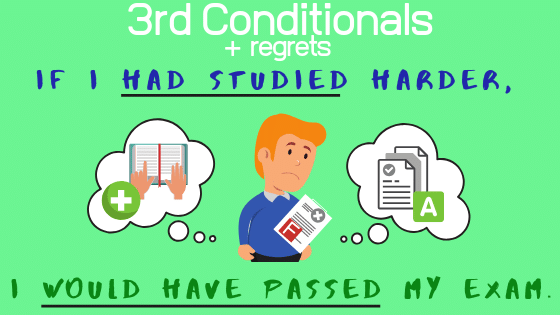
f I had known your reaction, I wouldn't have told you. 
I wouldn't have told you if I had known your reaction.


If you had bought a lottery ticket, you might have won.
 

  • I would have bought the shoes if I hadn’t had to pay for the jacket.
  • She would not have gone to the party if she had needed to work.

lunes, 17 de abril de 2023

3rd Conditional


 As we have seen with the first conditional and second conditional, the third conditional can also be adapted to affirmative, negative and interrogative sentences. Remember to apply the formula: If + Past Simple + Subject + Would + Infinitive.

THIRD CONDITIONAL ENGLISH SPANISH

AFFIRMATIVE If I had listened to my mum's advice, I wouldn't be in this situation. 

NEGATIVE If I didn't fell asleep on the train, I would have not missed the stop. 

INTERROGATIVE Would you have gone to his wedding if he had invited you?


  1. If I _had enough____ (would have enough/had enough) money, I _would have bought____ (would have bought/had out) the land.
  2. If I _hadn’t overslept____ (had not overslept/would have not overslept) last night, I would have not missed_____ (had not missed/would have not missed) the train.

Present Unreal Conditional


The Present Unreal Conditional is used to talk about what you would generally do in imaginary situations.


A: What would you do if you won the lottery?
B: I would buy a house.
A: Where would you live if you moved to the U.S.?

B: I would live in New York.


lunes, 3 de abril de 2023

INVENTIONS AND DISCOVERIES


An invention is a unique or novel device, method, composition or process. The invention process is a process within an overall engineering and product development process. It may be an improvement upon a machine or product or a new process for creating an object or a result. Whereas, discovery is the act of detecting something new, or something previously unrecognized as meaningful.


Its researches registered 1134 inventions in the variety of fields.

A chair is one of the best inventions ever made.


UNREAL CONDITIONALS

We use past unreal conditionals to talk about things in the past that were not true (but hypothetically could have been) and the results of what would have happened if that was the case. Simply put: it was possible, but it did not happen.

EXAMPLE 1       If I had known that I was going to be late, I would have called you.

  • I did not know that I was going to be late.
  • I did not call you.
  • The reason I did not call is that I did not know I would be late.


martes, 28 de marzo de 2023


 We use:

  • who and whom for people
  • which for things
  • that for people or things.

The relative pronoun is the subject/object of the relative clause, so we do not repeat the subject/object:

Marie Curie is the woman who she discovered radium.
(who is the subject of discovered, so we don't need she)

This is the house that Jack built it.
(that is the object of built, so we don't need it)


2.  We also use relative clauses to give more information about a person, thing or situation:

Lord Thompson, who is 76, has just retired.
We had fish and chips, which I always enjoy.

I met Rebecca in town yesterday, which was a nice surprise.


whose and whom

We use whose as the possessive form of who:

This is George, whose brother went to school with me.


Married


  • Why do people get married? They do so because they are in search of life-long companionship, through which they can fill their life with love and happiness.

  • However, in order to live a happy married life, it is essential to accept your spouse the way they are. Everyone has different beliefs, thinking patterns, opinions, and viewpoints. So it is natural that no two people think alike. Hence, we can say that marriage is a merger of two separate sets of beliefs and mindsets. Due to these unlike mindsets, a couple tends to differ in terms of the way they deal with different matters in life. These differences create conflict in marriage, thus resulting in an unhappy marriage.


  • EXAMPLES


  • Let's get married as soon as we can.

  • So why get married at all?

  • They had been married almost five years, so... that meant the baby was conceived long before they met - about the time he and Tessa were going to get married.

  • So why get married at all?

  • You want to get married outside?


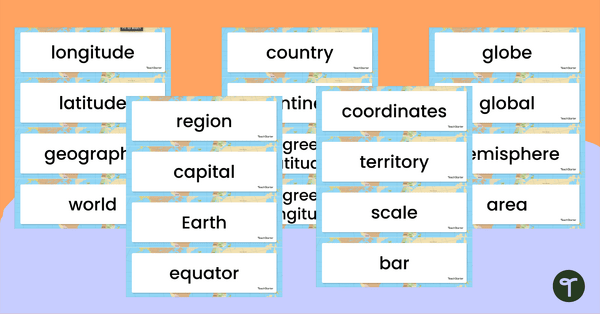
Vocabulario de Geographical nouns y adjectives

  geography geology geophysics geopolitics archipelago bay beach border canal cape capital cliff climate coast coastline continent country d...